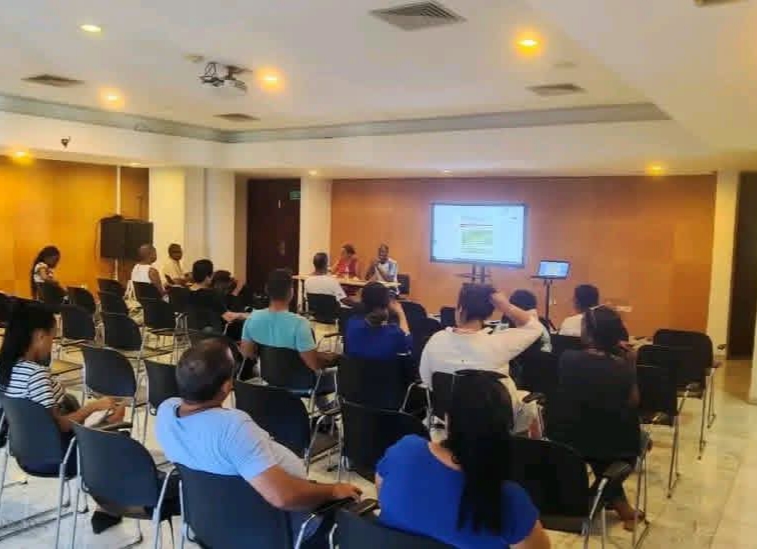
“We also face the process of preparing the economic plan and budget for the year 2027, at a complex moment due to the number of closed hotels, others with compacted services, and a number of interrupted workers who are at the destinations.”
Morales Verea mentioned the adoption of measures for those in closed facilities to discuss or analyze at least the fixed expenses, with those there preserving those accommodations, until the revenue plan can be examined, due to the uncertainty of not knowing when they will be able to reopen for operations.

He stated that the discussions must be tempered to the transformations themselves, due to changes in management models, which is a challenge, considering that workers must know how operations will be from now on. “This is also a great challenge for the union movement,” he emphasized.
A fundamental chapter is related to the new Labor Code, collective bargaining, the formation of General Guidelines, and Collective Labor Agreements. “There is already a diagnosis of where guidelines are signed with the business system and the budgeted sector, in the Ministry, and where national and provincial matters will correspond.”
In this aspect, he reiterated the training required for union leaders to negotiate well and also for the workers, who will later have to approve the Collective Labor Agreement after it is announced and generates the corresponding debates.
He emphasized that “it is necessary to continue strengthening the assemblies of affiliates and workers as a mechanism for real participation.”
Morales Verea acknowledged that the organization’s influence is crucial to ensure success in each of these processes, a good way, he stated, to welcome October 28 when we will celebrate the 31st anniversary of the foundation of the SNTHT.